
Reasons behind low cooling in summer
Discover the main reasons behind low AC cooling in summer, from dirty filters and low refrigerant to poor airflow and voltage issues. Learn when to fix it yourself and when to call a technician
Reasons Behind Low Cooling in Summer
Most homeowners assume low cooling is caused by only one or two issues, but the truth is that dozens of factors can contribute. Sometimes it’s a minor problem like a dirty filter; other times, it’s a technical failure like a damaged compressor or refrigerant leak. By exploring each cause in depth, this section helps you diagnose the exact problem, avoid misdiagnosis, and know whether you can fix the issue yourself or whether a professional must intervene.
1. Low Refrigerant Level
Low refrigerant makes your AC lose its cooling strength because the system cannot absorb heat properly. When the gas level drops, the AC takes much longer to cool the room, the airflow becomes warm, and the unit starts running nonstop. You may hear hissing sounds or notice ice forming on the coils. A technician must locate the leak, repair it, and refill the refrigerant to restore cooling performance.
2. Refrigerant Leaks
Refrigerant leaks usually start slowly through pinholes, loose joints, or corrosion inside copper coils. When the gas escapes, the AC loses pressure and cooling drops quickly. The system begins blowing warm air, freezing the evaporator, or shutting down during peak heat. Ignoring leaks leads to compressor damage and higher electricity bills. Only a trained technician can detect the exact leak point, repair the damage, and refill the refrigerant safely.
3. Dirty Outdoor Condenser Coils
Outdoor condenser coils release heat, but dirt, sand, and pollution form a layer that traps heat inside the system. When the coils stay dirty, the AC struggles to push hot air out, causing weak cooling and longer run time. The outdoor unit becomes hot to touch, and energy usage increases. Regular coil cleaning helps maintain proper heat transfer, improves cooling speed, and reduces the load on the compressor during summer.
4. Dirty Indoor Evaporator Coils
Indoor evaporator coils absorb heat from the air, but dust buildup blocks the coil surface and weakens cooling. When these coils get dirty, the AC blows warm or uneven air because heat cannot transfer properly. Over time, the system may develop ice around the coil, reducing airflow even more. Professional deep cleaning restores smooth heat absorption, protects the compressor, and brings back strong cooling performance throughout the room.
5. Clogged Air Filters
Air filters trap dust, but when they get clogged, airflow drops sharply and cooling becomes weak. A blocked filter makes the AC work harder, reduces indoor comfort, and may cause the evaporator coil to freeze. You may also notice a dusty smell or uneven cooling around the room. Cleaning or replacing filters regularly helps maintain strong airflow, smooth cooling, and healthier indoor air during summer months.
6. Blocked or Poor Airflow
Around Outdoor Unit, The outdoor unit needs open space for hot air to escape, but walls, plants, furniture, or construction debris can block airflow. When heat gets trapped around the condenser, the AC runs longer and still struggles to cool the room. The unit may even overheat during peak summer hours. Keeping the area clear allows proper ventilation, protects the compressor, and helps the AC maintain consistent cooling performance.
7. Compressor Issues
The compressor is the heart of the cooling cycle, and any weakness directly affects performance. A faulty capacitor, overheating motor, or worn-out compressor reduces refrigerant flow and causes warm airflow indoors. You may hear loud buzzing, clicking, or notice frequent shutdowns. Since compressor problems are complex and costly, a technician must diagnose the issue early to prevent major failures and restore cooling strength.
8. Faulty Outdoor Fan Motor
The outdoor fan pushes hot air away from the condenser, and when it stops working, the AC cannot release heat. A faulty motor causes the outdoor unit to become extremely hot, and cooling performance drops within minutes. You may notice the fan not spinning, running slowly, or making grinding noises. Replacing or repairing the fan motor helps restore ventilation, protect the compressor, and bring cooling back to normal.
9. Frozen Evaporator Coils
Coils freeze when refrigerant levels drop or airflow becomes weak due to dirt or blocked filters. Ice forms on the coil, blocking heat absorption and reducing cooling drastically. You may see water dripping after the ice melts or feel warm air coming from the vents. Turning off the AC and keeping the fan on helps defrost the coil, but the underlying cause must be repaired to prevent future freezing.
10. Thermostat Problems
Incorrect thermostat settings, bad sensors, low batteries, or wrong placement can confuse the AC and lead to poor cooling. A faulty thermostat misreads room temperature and makes the AC cycle on and off randomly. Direct sunlight or nearby heat sources can also affect readings. When the thermostat sends the wrong signals, cooling becomes inconsistent. Proper calibration or replacement restores smooth operation and balanced temperature control.
11. Electrical Issues
Loose wiring, voltage dips, blown capacitors, or weak connections interrupt the cooling cycle and make the AC shut down unexpectedly. During summer, power fluctuations become common, and sensitive AC components react quickly. You may hear humming sounds, clicking, or notice the system not starting at all. Electrical problems are risky to handle without training, so a technician should check and fix them to protect the compressor and PCB.
12. Wrong AC Mode or
Temperature Settings
Sometimes low cooling comes from simple settings. If the AC is set to Fan Mode, it blows air without cooling. A high temperature setting prevents the compressor from turning on, and energy-saving modes may cause the AC to turn off earlier than needed. Incorrect settings reduce comfort and make the room feel warmer. Adjusting the temperature and selecting Cool Mode usually restores normal cooling quickly.
13. Duct Leaks or Poor Duct Design
Leaking ducts allow cool air to escape into ceilings or attics before reaching your rooms. Hot air can also enter the vents, creating uneven temperatures across the home. Poor duct design reduces airflow and makes the AC run longer. You may feel weak cooling or notice some rooms staying warmer. Repairing leaks and improving duct layout helps maintain proper air distribution and better cooling throughout the house.
14. Poor Home Insulation
Homes with weak insulation lose cool air quickly, especially during summer afternoons. Hot walls, thin windows, and gaps around doors allow heat to enter continuously. Even a well-functioning AC struggles to cool the room because the heat load remains high. Poor insulation forces the unit to run longer and reduces comfort. Improving insulation helps maintain stable temperatures and reduces stress on your AC system.
15. Undersized AC
An AC with low tonnage cannot handle the heat load of a large room or strong summer temperatures. It keeps running without achieving the desired cooling, which leads to warm or uneven airflow. The system struggles constantly, increasing electricity usage and wear on the compressor. Choosing the right size based on room area, sunlight, and occupancy improves performance and prevents low cooling issues.
16. Oversized AC (Short Cycling)
An oversized AC cools the room too quickly and shuts off before completing a full cycle. This short cycling prevents proper humidity removal, causing the room to feel muggy and warmer than expected. Frequent on and off cycles also strain the compressor and raise electricity usage. A correctly sized AC maintains longer cooling cycles, better humidity control, and overall comfort during summer.
17. Incorrect Installation
Wrong refrigerant charging, poor duct alignment, weak airflow design, or improper indoor unit placement can reduce cooling from day one. Installation mistakes cause pressure imbalances, leaks, and airflow loss across the system. You may notice uneven temperatures, noisy operation, or slow cooling. A proper installation by a trained technician improves efficiency, protects components, and helps the AC deliver its full cooling capacity.
18. Sunlight Heating the Indoor Unit
If the indoor unit sits near a sunny window, direct heat affects its sensor and disrupts temperature readings. The AC may shut off earlier or blow warm air because it misjudges the room temperature. Continuous sunlight also warms the unit’s body, slowing cooling performance. Relocating the unit or blocking sunlight helps maintain accurate readings and smoother cooling operation.
19. Heat From Electronics and Indoor Appliances
Electronics like TVs, computers, kitchen appliances, and lighting generate heat that increases the room temperature. As heat builds up, the AC works harder and longer to cool the space, especially during evening hours. When several appliances run together, cooling becomes slower and less effective. Managing heat sources and reducing indoor load helps the AC maintain comfortable temperatures effortlessly.
20. Doors Opening Frequently
Every time a door opens, warm air enters the room and replaces the cool air. Frequent movement creates constant temperature changes and forces the AC to run longer. The cooling drops quickly in homes with kids, guests, or open balconies. Closing doors properly and limiting unnecessary openings helps maintain stable cooling and reduces stress on the AC system.
21. Old AC Unit
Older AC units lose efficiency due to worn-out compressors, corroded coils, weak motors, and outdated technology. Cooling becomes slower, power consumption rises, and breakdowns become frequent. Even with repairs, an aging system cannot perform like a newer unit. When maintenance costs increase and cooling drops sharply, replacing the AC becomes a more practical and cost-effective option.
22. Lack of Regular Maintenance
Skipping maintenance allows dirt buildup, hidden leaks, weak airflow, and slow cooling to develop over time. The AC starts consuming more power and delivers less cooling during summer. Regular servicing keeps coils clean, detects early faults, and maintains proper refrigerant flow. A simple tune-up prevents bigger problems and helps the AC run smoothly throughout the season.
Seasonal Factors Unique to Summer
Summer brings a unique set of environmental challenges that directly affect your AC’s performance, even when the unit is in good condition. High humidity levels increase the cooling load, voltage fluctuations become common during heatwaves, and dry weather brings in extra dust that quickly clogs coils and filters. These seasonal conditions force your AC to work harder, reducing cooling efficiency, increasing power consumption, and making the home feel warmer than usual. Understanding these summer-specific factors helps you identify issues early and take preventive steps to maintain strong cooling even in extreme heat.
Humidity and Its Effect on Cooling
High humidity makes the air feel heavy and sticky, which reduces overall cooling comfort even if the AC is running properly. When there is excess moisture in the air, your AC must remove both heat and humidity, and this extra workload slows down the cooling process. As a result, the AC runs longer, consumes more electricity, and may deliver slightly warmer air because part of its cooling capacity is used for dehumidification. This is why rooms feel less cool during humid summer days and why the AC struggles more compared to dry weather.
Voltage Drop During Heatwaves
During extreme heatwaves, electricity demand increases sharply, causing voltage drops in many areas. Low voltage weakens AC cooling because the compressor and fan motor cannot run at full power. When the voltage dips, the refrigerant flow becomes weaker, the cooling cycle slows down, and the AC may start and stop repeatedly. Signs of low voltage include dimming lights, the AC making humming sounds, slow cooling, and the outdoor unit getting unusually warm. If ignored, continuous low voltage can also damage the compressor and capacitors.
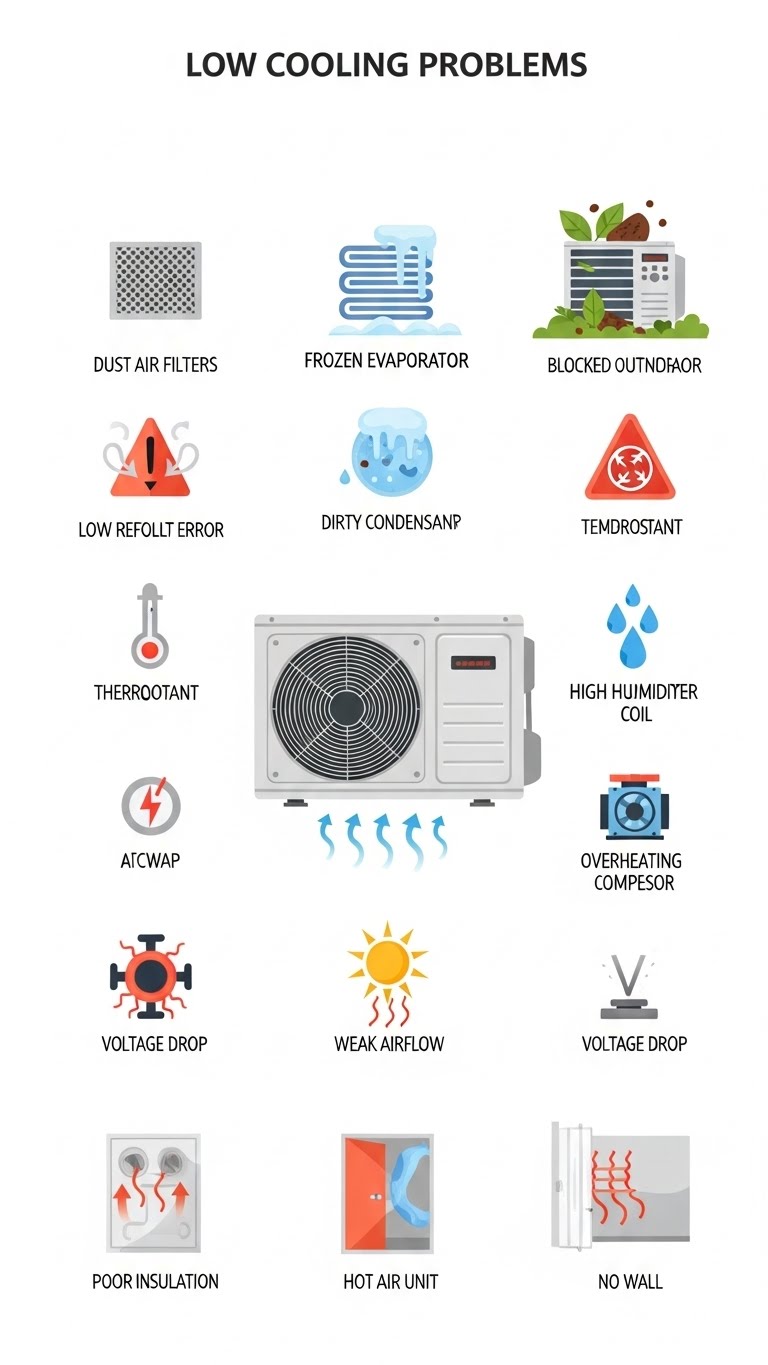
Fix It Yourself vs. When You Call a Technician
| DIY Tasks You Can Handle Safely | Technician Should Handle |
|---|---|
| You can clean or replace dirty air filters. | A technician should handle refrigerant charging and leak repair. |
| You can adjust thermostat settings and check if the mode is correct. | A technician should repair electrical faults and loose wiring. |
| You can reset tripped breakers and check the fuse. | A technician should fix compressor problems or motor failures. |
| You can clear leaves, dust, or plastic bags around the outdoor unit. | A technician should clean evaporator coils and condenser coils deeply. |
| You can check airflow and remove small indoor blockages. | A technician should repair damaged ducts or correct airflow design. |
| You can replace thermostat batteries. | A technician should fix expansion valve problems or sensor issues. |
Wrapping Up:
Low cooling in summer feels frustrating, especially when the temperature rises and every room starts warming up faster than usual. Your AC carries a bigger load during peak heat, so even the smallest issue can slow down its cooling power. Dust buildup, weak airflow, thermostat mistakes, low refrigerant, and blocked outdoor ventilation all add pressure on the system. Once you understand how these factors affect your AC, you can spot early signs of trouble and keep your home cool without stressing the unit during the hottest hours of the day.
Many people rush to refill gas, but low cooling has many more possible causes. Sometimes the problem sits right in front of you, like a dirty filter or wrong mode setting. Other times, a hidden leak, a weak compressor, poor insulation, or electrical faults reduce cooling without any warning. When you know the full range of issues that affect summer cooling, you can decide what you can fix yourself and what needs expert attention. This approach helps you save time, lower repair costs, and maintain steady cooling throughout the season.